
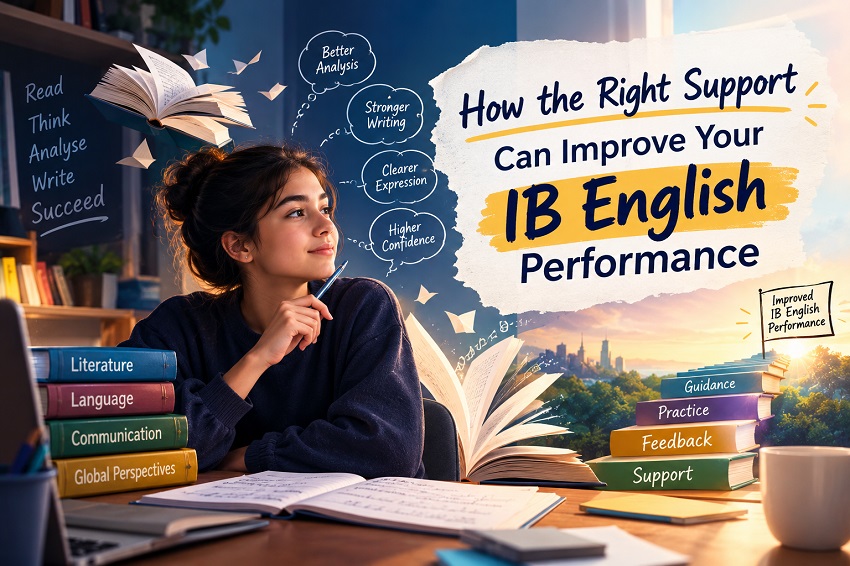
IB English can be challenging because success depends on much more than reading books and remembering literary terms. Students are expected to understand complex texts, analyze language and authorial choices, develop strong arguments, and communicate ideas clearly in both written and oral assessments.
For students who want structured academic support, working with an IB English Tutor can make the learning process more focused and manageable. Personalized tutoring can help students understand the expectations of the IB curriculum, identify weaknesses, improve analytical skills, and prepare more confidently for assessments.
Teaching Academy provides academic support designed around the individual learning needs of IB students, helping them approach English with greater clarity, confidence, and consistency.
What Does an IB English Tutor Do?
An IB English Tutor helps students develop the skills required to perform effectively in IB English. Instead of simply explaining chapters or providing answers, a good tutor focuses on how students think, analyze, organize, and communicate their ideas.
Tutoring may include support with:
- Literary and non-literary text analysis
- Essay planning and structure
- Argument development
- Language and literary techniques
- Close reading
- Comparative analysis
- Oral assessment preparation
- Exam preparation
- Time management
- Academic writing
- Understanding assessment expectations
Because every student has different strengths and weaknesses, personalized tutoring can be particularly useful when classroom instruction alone does not provide enough individual attention.
Why Is IB English Difficult for Many Students?
One of the biggest challenges of IB English is the level of analysis expected from students. Simply identifying a metaphor, theme, or literary technique is usually not enough. Students need to explain why a particular choice matters and how it contributes to meaning, tone, characterization, perspective, or the overall purpose of a text.
Students may also struggle with turning their observations into well-developed arguments.
For example, identifying imagery in a poem is only the beginning. A stronger analysis considers how the imagery affects the reader, what it reveals about the speaker or subject, and why the writer may have chosen that particular image.
An experienced IB English Tutor can help students move from basic identification toward deeper interpretation and critical analysis.
How Can an IB English Tutor Improve Your Skills?
1. Builds Stronger Textual Analysis
Textual analysis is central to IB English. Students need to examine how writers use language, structure, tone, imagery, symbolism, characterization, and other techniques.
A tutor can teach students how to approach a text systematically rather than randomly searching for literary devices. This helps students create interpretations that are supported by relevant textual evidence.
2. Improves Essay Writing
Strong ideas need strong organization. Students can lose marks when their arguments are unclear, repetitive, poorly structured, or insufficiently supported.
An IB English Tutor can help students understand how to create:
- Clear introductions
- Focused thesis statements
- Logical paragraphs
- Effective topic sentences
- Relevant textual evidence
- Detailed analysis
- Strong conclusions
With regular practice and feedback, students can gradually develop a more confident academic writing style.
3. Develops Critical Thinking
IB English encourages students to think beyond obvious interpretations. A tutor can introduce questions that encourage students to examine different perspectives and consider alternative meanings.
Instead of asking only, “What does this passage mean?” students can learn to ask:
Why has the writer presented it this way?
How does language influence the reader’s response?
What assumptions are present in the text?
How does context affect interpretation?
These questions can lead to more sophisticated analysis.
Online IB English Tutor: Why Choose Online Learning?
Online tutoring gives students the opportunity to receive personalized academic support without being restricted by location. Lessons can be conducted from home using digital learning tools, shared documents, online resources, and interactive discussions.
One of the major advantages is flexibility. Students can schedule sessions around school, extracurricular activities, and other commitments.
Online tutoring can also make it easier to review previous work, share written assignments, discuss feedback, and track progress over time.
For international IB students, an online IB English tutor can provide convenient access to specialized academic guidance regardless of where the student lives.
IB English HL vs SL: Does Tutoring Help Both?
Yes. Both IB English HL and SL students can benefit from personalized tutoring, although the level of support required may differ.
Students studying HL may need additional assistance with advanced analysis, complex texts, detailed argumentation, and managing a demanding workload.
SL students may benefit from strengthening fundamental analytical and writing skills while becoming more familiar with assessment expectations.
A personalized tutoring approach allows lessons to focus on the student’s current level rather than following a one-size-fits-all teaching method.
How Can a Tutor Help With IB English Assessments?
IB English includes different forms of assessment, and students need to understand how to demonstrate their skills effectively.
A tutor can help students prepare by breaking larger assignments into manageable stages.
For written work, this may involve:
- Understanding the question or task
- Selecting appropriate evidence
- Developing an argument
- Creating an outline
- Writing the first draft
- Reviewing the analysis
- Improving organization and clarity
- Editing the final response
For oral assessments, students may practice presenting ideas clearly, maintaining an organized structure, discussing textual evidence, and responding confidently.
The goal is not simply to complete an assignment but to help students understand how to produce stronger academic work independently.
What Should You Look for in an IB English Tutor?
Choosing the right tutor can make a significant difference. Before selecting an IB English Tutor, students and parents should consider several factors.
IB Curriculum Knowledge
The tutor should understand the IB approach to English and the skills students are expected to demonstrate.
Strong English and Literature Knowledge
A good tutor should be comfortable discussing literary techniques, themes, structure, language, context, and different interpretations.
Personalized Teaching
Students learn differently. Effective tutoring should adapt to the student’s current abilities, academic goals, and areas of difficulty.
Constructive Feedback
Feedback should explain not only what needs improvement but also how the student can improve it.
Exam and Assessment Preparation
A tutor should help students become familiar with the types of thinking and communication required during assessments.
How Many Hours Should You Spend With an IB English Tutor?
There is no universal number of tutoring hours that works for every student. The appropriate schedule depends on the student’s current performance, academic goals, workload, and upcoming assessments.
A student who is already performing well may need occasional sessions for targeted feedback. Another student who is struggling with writing or analysis may benefit from regular weekly lessons.
Consistency is generally more useful than last-minute preparation. Regular sessions give students opportunities to practice, receive feedback, apply corrections, and develop their skills gradually.
Can an IB English Tutor Help Improve Grades?
An IB English Tutor can provide structured guidance, targeted practice, and personalized feedback that may help students improve their academic performance. However, tutoring cannot guarantee a particular grade.
The student’s own effort remains important. Reading regularly, practicing analysis, completing assignments, reviewing feedback, and preparing for assessments all contribute to progress.
The best tutoring relationship is one where the student gradually becomes more independent and confident rather than relying completely on the tutor.
Frequently Asked Questions About IB English Tutoring
What is an IB English Tutor?
An IB English Tutor provides personalized academic support to students studying IB English. Support may include text analysis, essay writing, oral preparation, exam preparation, and developing critical-thinking skills.
Is an online IB English tutor effective?
Yes. Online tutoring can be effective when lessons are interactive, personalized, and focused on the student’s specific learning needs. Students can receive feedback, discuss texts, practice writing, and prepare for assessments remotely.
When should I start IB English tutoring?
Students can start tutoring whenever they identify a need for additional support. Starting early can provide more time to develop analytical and writing skills instead of waiting until examinations are approaching.
Can an IB English Tutor help with essay writing?
Yes. A tutor can help students understand essay structure, develop arguments, use textual evidence effectively, strengthen analysis, and improve clarity and organization.
Is tutoring useful for IB English HL?
Yes. HL students can use tutoring to strengthen advanced analytical skills, improve written responses, prepare for assessments, and manage challenging texts and assignments.
Choose Teaching Academy for Personalized IB English Support
IB English becomes easier to approach when students understand what is expected and have a clear strategy for developing their skills. The right IB English Tutor can provide personalized guidance, detailed feedback, and structured practice while helping students become more confident independent learners.
Teaching Academy supports IB students with focused academic guidance designed around their individual requirements. Whether you need help understanding literary analysis, improving essays, preparing for assessments, or building confidence in English, personalized tutoring can provide a structured path forward.
If your goal is to become a stronger IB English student, start by identifying the areas where you need the most improvement and build a consistent learning plan around them.